
The year 2026
episodes
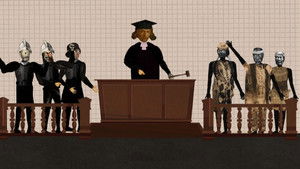

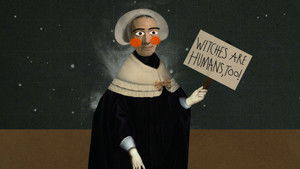


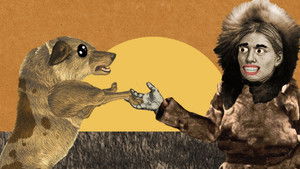
Destruction, terror, war: It seems that there has never been more violence than in the world today. But what can we learn from history? Was there really less violence in the past?

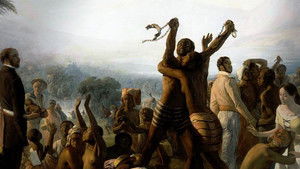
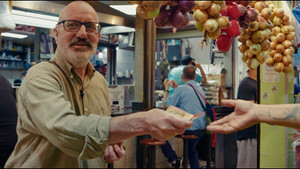
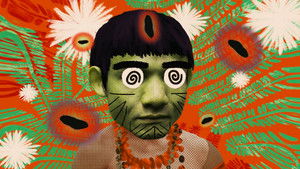
Is drug-induced intoxication a new phenomenon – emerging in a pleasure-seeking society that knows no bounds? Discoveries of drug artifacts thousands of years old raise doubts. Intoxication seems to have been used in many cultures for spiritual insights and social rituals. Why, then, are most drugs illegal today?
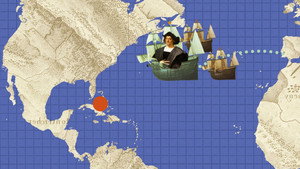
To this day, Columbus is considered the first person to have crossed an ocean. But archaeology, genetics, and indigenous knowledge systems tell a different story: Polynesians, Vikings, and even early humans reached distant continents long before him. Why do we remember Columbus—and not them?

Traditions seem ancient—but many are invented, politically dictated, or shaped by modern tourism. This documentary traces the origins of traditions from Bavaria through France to Georgia, showing how customs create identity, secure power, or foster community. And it asks: If traditions are invented, why don't we simply create new ones ourselves?
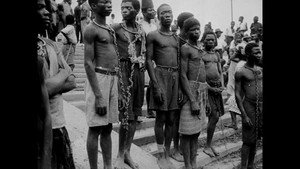
Africa is often considered a continent entirely colonized by Europeans – although large parts of it remained independent until the 19th century. So what was it really like? This documentary tells the story of Leopold II's reign of terror in the Congo, of African-American colonizers in Liberia, and of the Ethiopian victory at Adwa. It shows just how multifaceted Africa's history truly was.
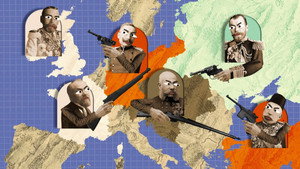
GPS, space travel, industrial fertilizer production: they all arose under military pressure. Wars accelerate decisions, pool resources, and drive innovation. But they also destroy knowledge, societies, and lives. Is it possible, then, to achieve progress without extreme violence?

The myth sounds seductive: Johannes Gutenberg invents printing – and suddenly the Reformation, the scientific revolution, and the Enlightenment begin. A single machine is said to have triggered an entire era. But historical reality is far more complex. From Chinese prototypes to conservative early printing presses, to Luther and global knowledge networks, it was the interplay of many forces that gave the printed word its historical power.
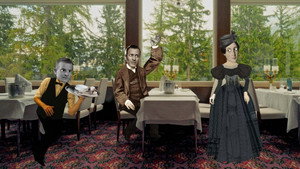
Did tourism originate with the railway? Pilgrimages were important precursors – but it was romantic notions of nature and the expansion of infrastructure that created the necessary conditions. Politics and media staging ultimately shaped mass travel as we know it: tourism arises when longing finds structure.
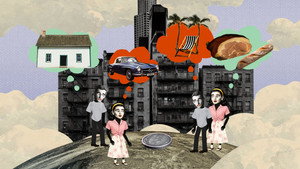
Are the rich today richer than ever? This episode shows how the gap between rich and poor has developed over the millennia: From the first states, through the slave trade and industrialisation, to globalised trade and neo-liberal politics. How did the rich get richer? And can the trend be reversed?

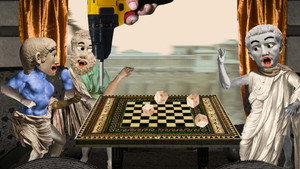

From Caesar’s cipher to the Enigma machine, from Renaissance intrigue to today’s online payments, the art of encoding and decoding information has evolved for centuries. Wars, conspiracies, and revolutions - the hidden science of cryptology has shaped history far more than most people realize.
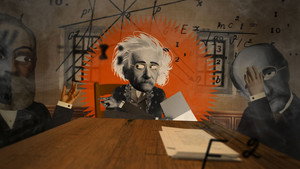
Michelangelo, Newton, Einstein - some individuals have achieved extraordinary things. But are “true geniuses” real, or have we invented them because we want to believe in someone exceptional? Experts from four countries explore how the idea of genius emerged and what lies behind the enduring “cult of genius.”
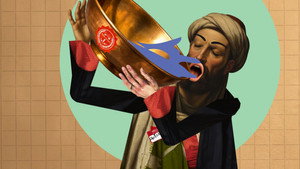
Clean drinking water is often seen as a hallmark of modernity. But could humans have survived for millennia if water had always been undrinkable? From antiquity to the present day, it becomes clear that technology is only part of the story. What matters is how societies manage water and who has access to it. Water is not just a question of nature, but also of power and inequality.
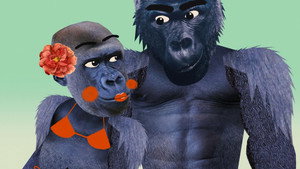
Some believe monogamy is deeply rooted in our genes, while others see it as a cultural invention. History shows that human relationships have always evolved, and that monogamy has often been just one option among many. So why did it become so dominant in Europe, while other cultures followed different paths?

Many people believe that, in the past, people were able to express themselves more freely. But the history of freedom of expression has always been fraught with contradictions: even in ancient Athens, freedom of expression and censorship coexisted.
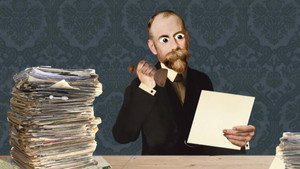
Surnames seem to have always existed, but their history is surprisingly recent. This episode traces their history, from the trading towns of the Middle Ages to 20th-century Turkey and shows that surnames have never merely served as a means of identification.

Having somewhere to be alone is taken for granted today, but that was not always the case. From Ancient Greece and Rome to 17th century England, this episode shows how privacy is closely linked to power, technology, social inequality and freedom.

Why do we feel more rushed than ever despite time-saving technology? This episode explores how acceleration has transformed daily life since industrialization, and how it can also steal our time - from the steam locomotive to the smartphone, from the shock of the medieval plague to today's 47-second attention span.
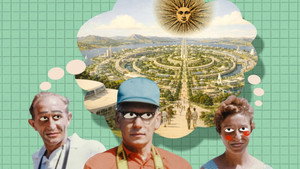
Why have we lost faith in a better future? Once seen as blueprints for progress, utopias are now often dismissed as unrealistic dreams, while dystopian visions thrive. This episode traces the history of utopian thought from Thomas More to today and asks why our hopes have faded - and whether we should rediscover them.

Although many of Freud's theories are now considered disproven, he is still widely seen as the father of modern psychotherapy. Why does his legacy endure? This episode explores how the roots of modern psychotherapy actually predate Freud by centuries.
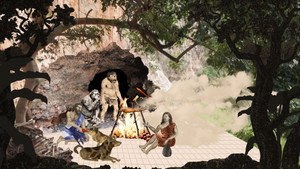
The cliché of Stone Age humans living in caves is challenged by discoveries of ancient huts. In the Middle Ages, millions of cave dwellings provided homes for poor farmers. So what did our ancestors really live in? And why do some Finns still spend part of their lives underground today?
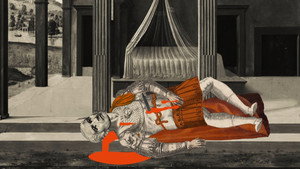
Is tyrannicide ever justified for the greater good, or does it undermine a just society? This episode explores how such acts have been legitimized, who carried them out and why - from Caesar and Hitler to assassinations targeting today's authoritarian regimes.